

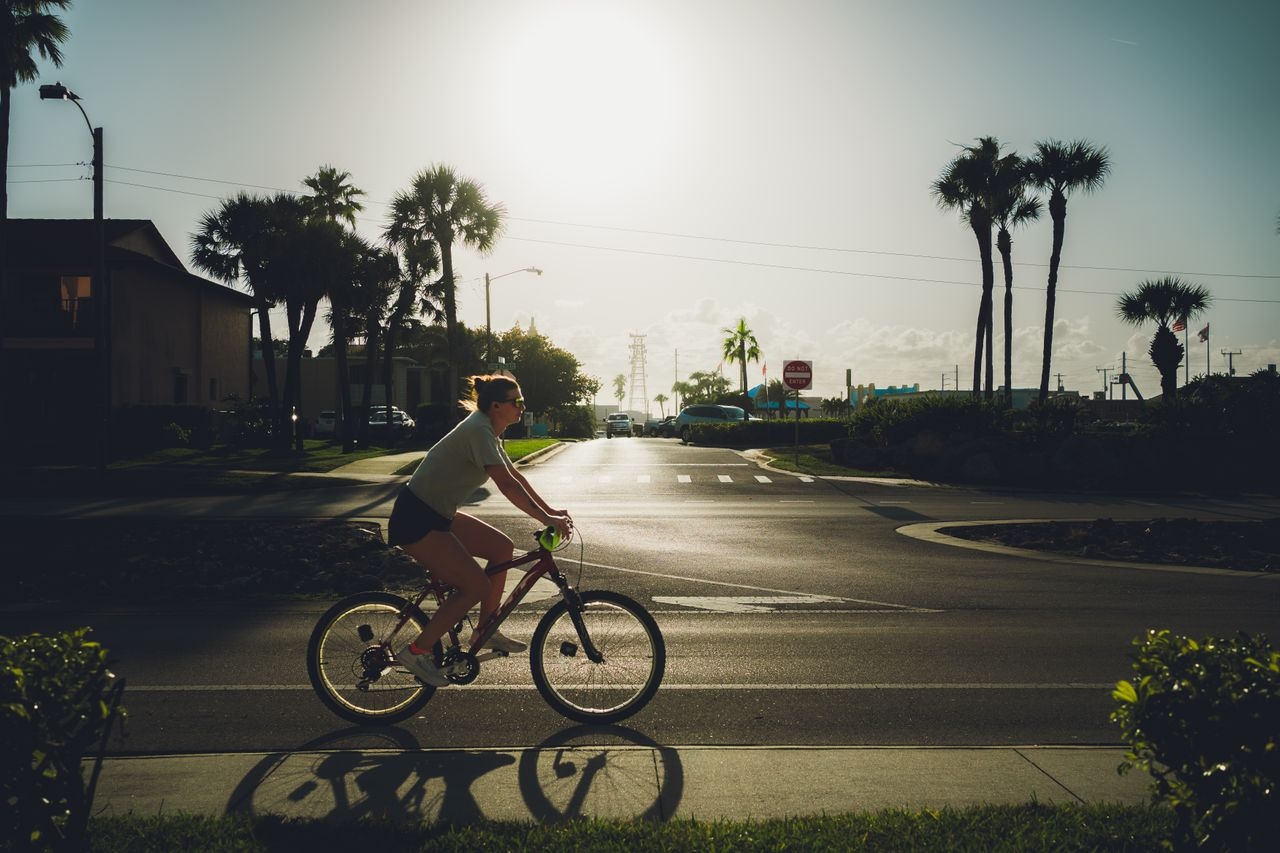
You were riding your e-bike through Tallahassee when a car turned across your path, pulled out from a side street, passed too closely, or entered the bike lane and hit you.
Now you may be dealing with injuries, a damaged e-bike, medical bills, and questions about how you are going to pay for the care you need. If you have auto insurance, you may also be wondering whether it matters when you were riding an e-bike rather than driving a car.
The answer is not always obvious. After an e-bike accident involving a motor vehicle in Florida, several types of insurance could provide coverage.
Which coverage applies depends on the driver who hit you, the type of e-bike you were riding, the insurance available to you, and the facts of the crash. Understanding those factors can help you avoid assuming that the driver's policy is the only source of coverage worth examining.
Does Florida Treat an E-Bike Like a Bicycle?
For many traffic-law purposes, yes. Florida law defines an electric bicycle as a bicycle or tricycle with a seat or saddle, fully operable pedals, and an electric motor of less than 750 watts. Qualifying e-bikes fall into one of three classes based on how the motor provides assistance and when that assistance stops.
Under Florida e-bike regulations, a qualifying e-bike generally has the same rights and duties as a bicycle and is not subject to the motor-vehicle licensing, registration, or financial-responsibility requirements that apply to cars.
That classification matters after a crash. If the bike has been modified so that it no longer fits Florida's definition of an electric bicycle, the legal and insurance analysis can change. That is why the bike's label, class, motor wattage, assisted speed, and any modifications are worth documenting.
Once the bike's classification is clear, the next question is which insurance policies could respond to the crash.
Could the Driver's Auto Insurance Cover Your Injuries?
If a driver negligently causes an e-bike collision, the driver's bodily injury liability coverage can be an important source of compensation if that coverage is available.
That insurance can potentially address losses caused by the crash, including medical expenses, lost income, and other legally recoverable damages, subject to the facts of the claim and the policy limits.
Florida does not require every driver to carry bodily injury liability insurance in every circumstance. That means we should not assume the driver who hit you has enough liability coverage, or any bodily injury coverage at all, simply because the vehicle was insured.
We also need to determine who caused the collision. A driver who turns left across your path, fails to yield while entering a roadway, opens a vehicle door into your path, or passes without leaving enough room can create very different liability questions from a crash where the circumstances are disputed.
At Brooks LeBoeuf, we look at both sides of that problem: what happened on the road and what insurance is actually available once responsibility is investigated.
Could Your Own Auto Insurance Help Even Though You Were on an E-Bike?
Potentially.
If you have an automobile insurance policy that includes uninsured or underinsured motorist coverage, commonly called UM or UIM coverage, that policy deserves careful review.
UM coverage is designed to protect insured people who are legally entitled to recover damages from an uninsured driver. Underinsured motorist coverage can become relevant when the responsible driver's available liability insurance is not enough to cover the injuries and losses caused by the crash.
The fact that you were riding an e-bike rather than sitting inside your own car does not automatically make your auto policy irrelevant. Florida's uninsured motorist statute expressly addresses situations in which an insured person is injured while not occupying a motor vehicle.
But UM coverage is not automatically available under every Florida auto policy. A named insured can reject the coverage or select lower limits, so the actual policy needs to be reviewed.
This can be especially important when an e-bike collision causes serious injuries and the responsible driver's available liability coverage is not enough to address the resulting losses.
Could Personal Injury Protection Apply to an E-Bike Accident?
Potentially, depending on the circumstances and the insurance available.
Florida's Personal Injury Protection law, commonly called PIP, provides benefits in certain motor vehicle accidents, including specified circumstances in which a person is injured by physical contact with a motor vehicle while not occupying a self-propelled vehicle.
An e-bike crash can raise additional coverage questions because Florida law treats qualifying e-bikes differently from ordinary motor vehicles, while the PIP statute contains its own requirements governing who is entitled to benefits and which insurer is responsible for paying them.
That means PIP coverage should be evaluated based on the type of e-bike involved, the rider's insurance status, the vehicle that struck the rider, and the applicable policies rather than assuming that PIP either automatically applies or is automatically unavailable.
Health insurance can also help pay for medical care while auto-insurance and liability issues are being resolved. If another insurer later pays for accident-related losses, the health plan can have reimbursement rights depending on the plan and circumstances. That's why keeping medical bills and insurance records together is important.
What Evidence Can Help With an E-Bike Injury Claim?
Insurance coverage is only part of the picture. You still need evidence showing how the crash happened and what injuries it caused.
After an e-bike collision, useful evidence can include:
- Photos or video of the crash scene
- Damage to the e-bike and the vehicle
- The e-bike's manufacturer label and specifications
- The bike's class, motor wattage, and assisted-speed information
- Dashcam, doorbell, business, or traffic-camera footage
- Witness contact information
- The police crash report
- Medical records and bills
- Records showing missed work or lost income
- Any electronic information recorded by the e-bike or related app
Do not rush to repair, discard, or replace a badly damaged e-bike before it has been documented. The damage to the bike can help document where the impact occurred, how the bike and vehicle came into contact, and whether a mechanical or equipment issue needs to be investigated.
That can be particularly important when the driver and rider remember the crash differently.
What Should You Do After a Car Hits You on an E-Bike?
Your first priority is your health. Get appropriate medical attention and follow the treatment recommendations you receive, particularly if you hit your head, were thrown from the bike, or develop pain or other symptoms after leaving the scene. If PIP coverage applies, Florida law generally requires initial medical services and care within 14 days after the motor vehicle accident for PIP medical benefits.
If you are able to do so safely, preserve photographs of the vehicle, license plate, roadway, bike lane or intersection, and the condition of the scene. Keep the driver's insurance information and any crash-report information you receive.
You should also locate your own automobile and health insurance policies rather than assuming they have nothing to do with the accident.
When insurers begin asking questions, remember that identifying available coverage is different from determining who was legally responsible. Both questions need to be addressed before you can understand the full picture.
Hit on an E-Bike in Tallahassee? Brooks LeBoeuf Can Help You Understand Which Coverage Matters
When a car hits you while you are riding an e-bike, you should not have to guess which insurance policy matters or whether riding an electric bicycle changes your options.
At Brooks LeBoeuf, we represent people injured in bicycle and motor vehicle accidents in Tallahassee and beyond. We can investigate how the collision happened, review the type of e-bike involved, identify the driver's available insurance, examine coverage available under your own policies, and help you understand what options are available based on the facts of your situation.
If you were injured while riding an e-bike in Tallahassee or elsewhere in Florida, contact Brooks LeBoeuf to discuss what happened and what steps make sense next.
Disclaimer: Results may vary depending on your particular facts and legal circumstances. The articles on this blog are for informational purposes only and are no substitute for legal advice or an attorney-client relationship. If you are seeking legal advice, please contact Brooks, LeBoeuf, Foster, Gwartney, Hobbs, Fusco & Richards, P.A. directly.