

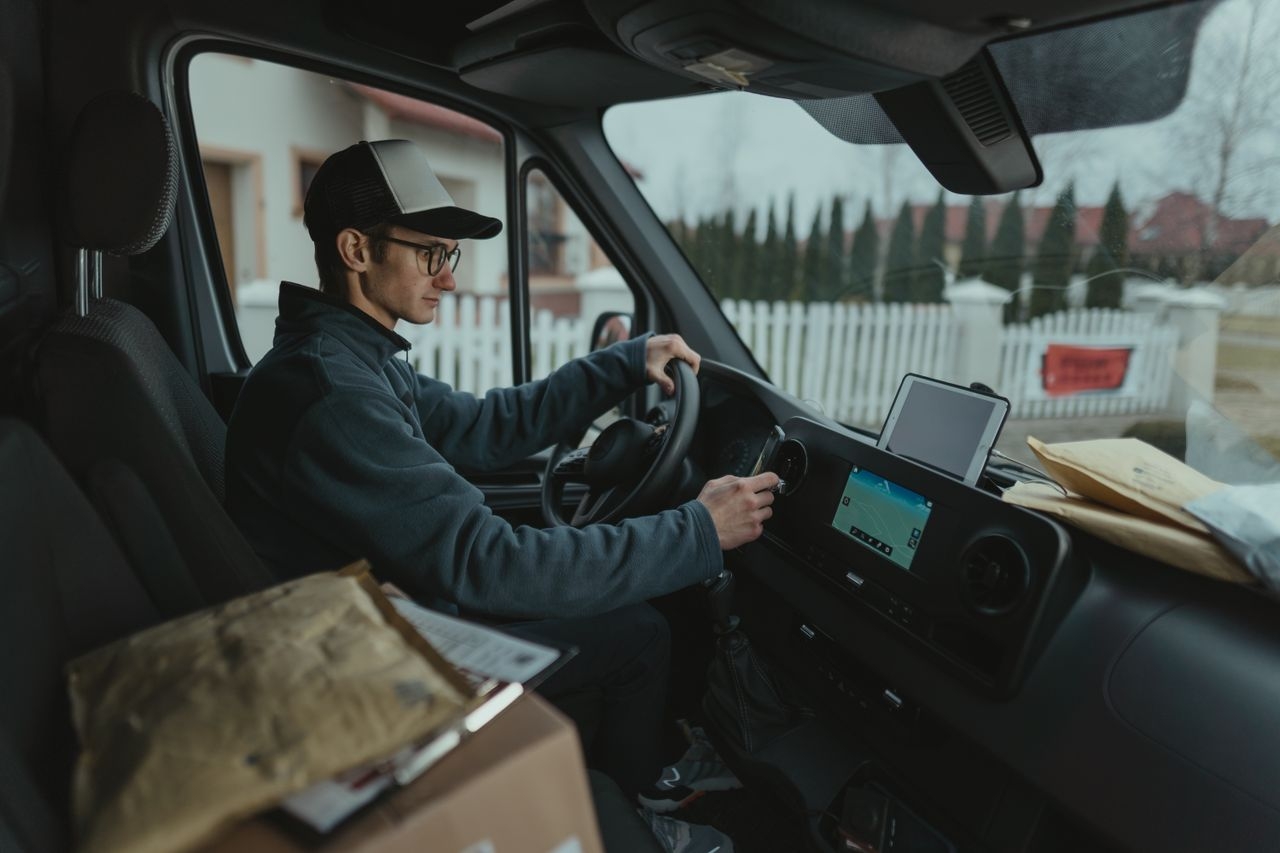
A delivery driver was pulling out of an apartment complex, changing lanes, turning through an intersection, or looking for the next address when the vehicle hit you.
Now you may be dealing with medical appointments, damage to your car, time away from work, and an insurance claim you never expected to make. You may also see an Amazon, FedEx, UPS, grocery-delivery, DoorDash, Uber Eats, or other company name connected to the delivery and wonder whether responsibility stops with the person behind the wheel.
In Florida, the answer depends on more than the logo on a vehicle or the delivery app the driver was using. The driver's relationship with the business, what the driver was doing when the crash occurred, who owned the vehicle, and the available insurance policies can all affect who needs to be investigated and what coverage may be available.
Identifying who the driver was working for, who owned the vehicle, and what insurance applied can help clarify where to look for responsibility and coverage after a delivery driver accident in Tallahassee.
Can a Delivery Company Be Responsible for a Driver's Accident?
A delivery company can be responsible for a crash in some circumstances, but company liability is not automatic.
One important question is whether the driver was an employee or agent of the business and was acting within the scope of that relationship when the collision happened. For example, a company employee making scheduled deliveries presents a different situation from someone who has finished working and is using a vehicle for a purely personal errand.
Florida law generally allows an employer to be held responsible for an employee's negligence when the employee is acting within the scope of employment. The relationship between the driver and business, including the company's right to control the driver's work, can therefore become an important part of the investigation.
That distinction is especially important today because not every delivery driver works under the same arrangement.
Does It Matter If the Driver Works for an App?
Yes. A crash involving a traditional company delivery truck can raise different questions from one involving a DoorDash, Uber Eats, grocery-delivery, or other app-based driver using a personal vehicle.
Many app-based delivery platforms classify their drivers as independent contractors rather than employees.
That does not mean an injured person should assume the delivery platform has no connection to the claim. It does mean that we need to look closely at the actual relationship, the circumstances of the delivery, and the available insurance rather than treating every delivery accident the same way.
Timing can also affect insurance coverage. Delivery platforms do not all structure coverage the same way, and coverage can depend on what the driver was doing in the app when the crash occurred. For example, there can be an important difference between simply being available for deliveries and actively completing an accepted order.
Those details can be difficult to reconstruct after a crash, particularly while you are also managing injuries, repairs, and calls from insurers. Preserving information about the driver and the delivery activity can help clarify which policies and parties need to be examined.
Could Someone Besides the Delivery Driver Be Responsible?
The driver is usually the first person whose conduct is examined after a delivery accident, but responsibility does not always end there.
Depending on the facts, the investigation can also involve:
- The driver's employer or another business that controlled the driver's work
- The person or business that owned the delivery vehicle
- A contractor or subcontractor whose own conduct contributed to the crash
- Another driver or party whose actions also contributed to the collision
Insurance is a separate question. A commercial policy, the driver's personal auto policy, or coverage associated with a delivery platform can become relevant depending on the vehicle, the driver's work status, and the terms of the applicable policies.
Vehicle ownership can matter too. Florida law can impose responsibility on a vehicle owner when another person negligently operates the vehicle with the owner's permission, although exceptions and statutory limits can apply depending on the circumstances. The way the vehicle was owned, provided, and used can therefore become another part of the liability analysis.
That is one reason we do not want to assume that the name on the police report tells the entire story.
At Brooks LeBoeuf, we look beyond the immediate collision to understand what the driver was doing at the time, who owned the vehicle, what business or delivery platform was connected to the trip, and which insurance policies need to be examined.
What Evidence Can Show the Driver's Connection to the Delivery Company?
To determine whether the driver was working for or through a business when the crash occurred, we need to connect the driver, vehicle, and delivery. A police report can identify the driver and vehicle, but it may not show whether the driver had accepted a delivery, which business arranged it, who owned the vehicle, or what authority the business had over the driver's work.
Other evidence can help answer those questions, including:
- Photographs of the delivery vehicle and company markings
- Any employer, contractor, or delivery-platform information
- Delivery, dispatch, or route records
- App activity showing whether an order was active
- Vehicle ownership and registration information
- Commercial insurance information
- Dashcam or surveillance video
- Witness statements
- Electronic or phone records when legally obtainable and relevant
Delivery vehicles are a familiar part of traffic around Tallahassee neighborhoods, apartment complexes, restaurants, downtown businesses, and areas near Florida State University. A crash can happen quickly, and identifying the company or platform connected to the delivery can become harder once the vehicle leaves the scene.
If you are able to do so safely, documenting the vehicle, company markings, license plate, driver's information, and location can help preserve details that might be difficult to recover later.
What If the Delivery Driver Was Using a Personal Vehicle?
The fact that a delivery driver was using a personal car does not mean the driver's personal auto policy is the only insurance that needs to be examined.
The driver's own automobile policy is one potential source of coverage, but personal insurance policies can contain provisions addressing business or delivery use. A delivery platform or other company may also maintain coverage that applies during certain stages of a delivery.
For example, DoorDash currently states that it maintains third-party liability coverage for qualifying accidents during an active delivery period, beginning when a driver accepts a delivery request and continuing until the order is delivered, unassigned, or canceled, subject to the policy's terms, conditions, limitations, exclusions, and applicable law. DoorDash also requires drivers to maintain their own auto insurance and cautions that a personal policy might not cover delivery activity.
The important point is not to assume that one policy automatically answers the coverage question.
The driver's work status, app activity, personal insurance, company or platform coverage, and circumstances of the crash need to be considered together.
What Should You Do After a Delivery Driver Hits You?
Your health comes first. Seek appropriate medical care and follow the recommendations you receive.
If law enforcement responds, obtain the crash report information. Preserve any photographs or video from the scene, along with the driver's name, license plate, vehicle markings, and any information showing which business or delivery platform was involved. Keep records related to your medical treatment, missed work, vehicle damage, and other accident-related losses.
Be careful about assuming that the first insurance company to contact you is the only insurer involved. Commercial and app-based delivery accidents can involve coverage questions that are not obvious from the scene of the crash.
Identifying those relationships early can also help preserve evidence and clarify which people, businesses, and insurance policies need to be investigated.
Hit by a Delivery Driver in Tallahassee? Brooks LeBoeuf Can Help You Understand What Comes Next
When a delivery vehicle hits you, identifying the driver is only part of understanding the claim. The driver's work status, the business or platform connected to the delivery, vehicle ownership, and available insurance can all affect what happens next.
At Brooks LeBoeuf, we represent people injured in commercial vehicle accidents throughout Florida, in Tallahassee and beyond. We can investigate the circumstances surrounding the delivery, identify the people and businesses whose conduct needs to be examined, review the available insurance coverage, and help you understand your options under Florida law.
If you were injured in a crash involving an Amazon-branded delivery vehicle, FedEx or UPS vehicle, food-delivery driver, grocery-delivery driver, or another delivery vehicle in the Tallahassee area, contact Brooks LeBoeuf to discuss what happened and the next steps available in your situation.
Disclaimer: Results may vary depending on your particular facts and legal circumstances. The articles on this blog are for informational purposes only and are no substitute for legal advice or an attorney-client relationship. If you are seeking legal advice, please contact Brooks, LeBoeuf, Foster, Gwartney, Hobbs, Fusco & Richards, P.A. directly.