

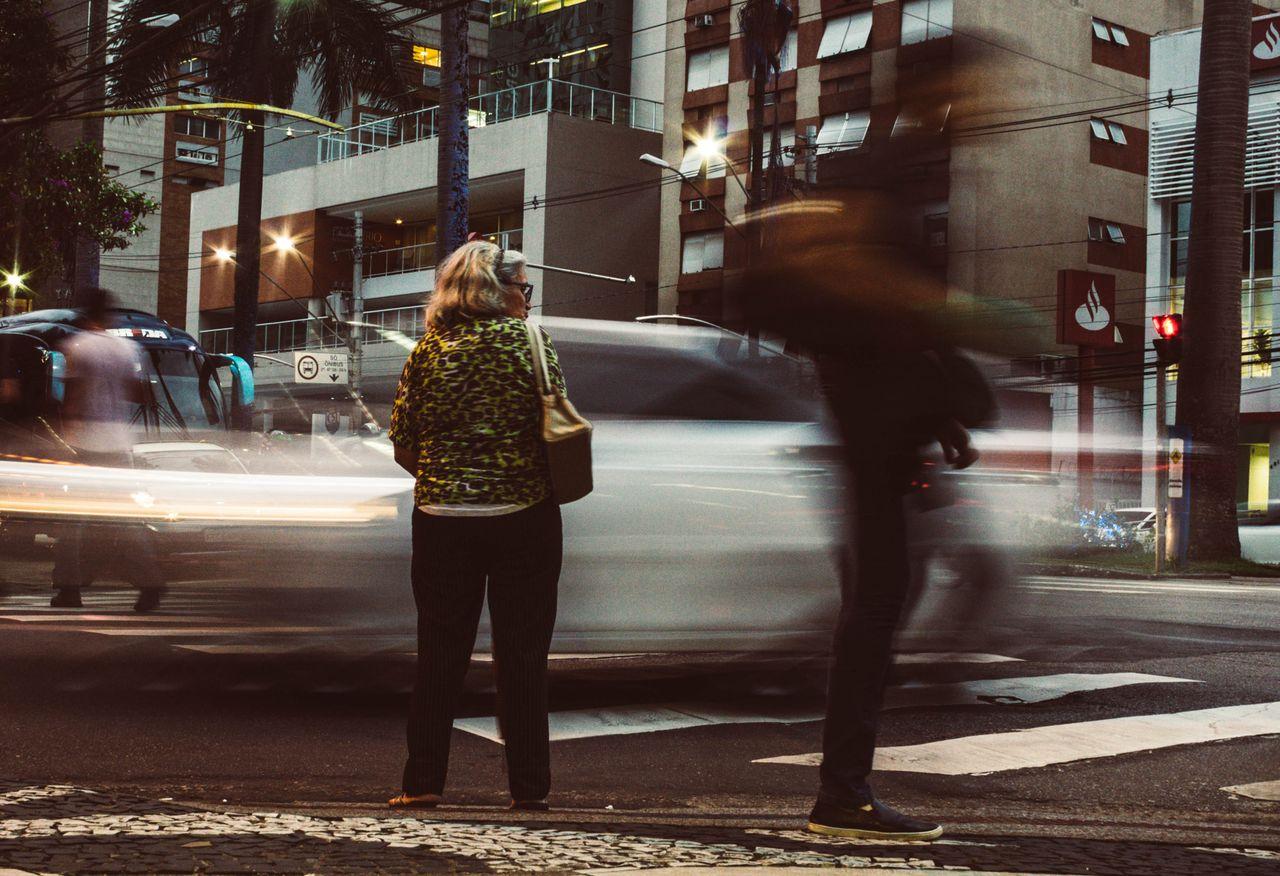
You were crossing a street after dinner, walking home from an event, or making your way through Tallahassee after sunset when, out of nowhere, a vehicle hits you. You’re now thrust into the nightmare that is dealing with a pedestrian accident. These incidents can be more difficult to prevent after the November time change when the sun sets much earlier, and pedestrians are harder to see in the roadway.
Later, the driver gives an explanation as to why they shouldn’t be considered at fault:
“I didn't see you.”
Maybe they say your clothes were too dark. Maybe they claim the street was poorly lit or that you were outside a marked crosswalk. Now you are wondering whether being difficult to see means you will automatically be blamed for the crash.
Just because the driver claims they didn't see you, it does not mean that the driver wasn’t at fault.
Visibility can be important in a pedestrian accident, but it is only one part of the analysis. Florida law imposes responsibilities on both pedestrians and drivers, and determining fault requires looking at what each person was doing before the collision.
Does “I Didn't See You” Excuse a Driver From Responsibility?
Not automatically.
Florida's pedestrian law specifically requires drivers to exercise due care to avoid colliding with pedestrians.
That does not mean a driver is automatically responsible for every collision involving someone on foot. But if the driver says they did not see you, that statement does not settle the question of fault.
The circumstances surrounding the crash still matter. Why didn't the driver see you? Was there enough time and distance to slow down, stop, or otherwise avoid the collision? Florida law also requires drivers to operate at a reasonable and prudent speed for the conditions and to reduce speed when hazards involving pedestrians or roadway conditions require it.
Was the driver watching the road? How fast was the vehicle moving? Were the headlights on? Was the driver turning? Were streetlights operating? Did parked vehicles, signs, landscaping, or other objects obstruct the driver's view?
Those details can help show what the driver could see, whether the driver's speed was appropriate for the conditions, and whether there was time and distance to respond.
What If You Were in a Crosswalk?
Where the collision occurred can be significant.
Florida's pedestrian statute contains specific rules for crosswalks. Depending on the traffic controls and signage at the location, a driver may be required to stop and remain stopped or to yield the right-of-way to a pedestrian crossing within the crosswalk.
But being in a crosswalk does not eliminate the need to examine what happened.
Traffic signals, pedestrian signals, signage, where you were within the roadway, whether you had a permitted crossing signal, the driver's direction of travel, and when you entered the crosswalk relative to the vehicle's approach can all matter.
That is why photographs or video showing the location, traffic controls, and surrounding roadway can provide information that a general description of the crash cannot.
What If You Were Not in a Crosswalk?
Being outside a marked crosswalk does not automatically mean the driver bears no responsibility.
Florida law does, however, place specific duties on pedestrians who cross outside certain crosswalks. A pedestrian crossing a roadway somewhere other than within a marked crosswalk or an unmarked crosswalk at an intersection must yield the right-of-way to vehicles on the roadway. Between adjacent intersections with operating traffic signals, pedestrians must use a marked crosswalk.
Pedestrians also cannot suddenly leave a curb or another place of safety and walk or run into the path of a vehicle that is so close it is impossible for the driver to yield.
Those rules can become important when fault is disputed.
At the same time, drivers continue to have a duty to exercise due care to avoid colliding with pedestrians. A case therefore should not be reduced to a single question such as, “Were you in the crosswalk?”
How and where you entered the roadway, how fast the vehicle was approaching, the distance between you and the vehicle, and what each of you did before the collision can all matter when determining who was responsible.
Can Dark Clothing or Poor Lighting Affect Your Claim?
Yes. Visibility can be part of the evidence, but it does not decide the case by itself.
A driver's insurer may argue that your clothing, limited street lighting, rain, glare, or another condition made you difficult to see.
The next question is how the driver was operating the vehicle under those conditions.
Florida law requires vehicles to use their required lights from sunset to sunrise, including during twilight hours. Drivers also must operate at a reasonable and prudent speed for the conditions, and Florida law requires an appropriately reduced speed when a special hazard exists involving pedestrians, weather, or roadway conditions.
That means limited visibility can make several facts especially important: the vehicle's speed, whether its headlights were operating and being used, whether the driver was paying attention, and whether the location gave the driver reason to watch for pedestrians, such as a crosswalk, intersection, residential area, business district, or event area.
The issue is therefore not simply whether you were easy to see.
It is what the driver could reasonably have been expected to see and whether the vehicle was being operated appropriately for the conditions that actually existed.
What Evidence Can Show What the Driver Could See?
Nighttime crashes create an important evidence problem: photographs taken the next afternoon may not show what the roadway looked like when the collision happened.
Evidence that can help reconstruct those conditions may include:
- Nearby surveillance or doorbell-camera footage
- Traffic-camera footage, if it was recorded and remains available
- Dash-camera recordings
- Photographs or video of the roadway taken at a similar time of night
- The location of streetlights and whether they were operating
- Evidence showing whether the vehicle's headlights were operating and being used
- Witness statements
- Law-enforcement photographs, measurements, diagrams, or other available scene documentation
- Skid marks or other physical evidence from the roadway
- Event-data-recorder or other vehicle data, when available and legally obtainable
- Phone records or other evidence of driver distraction, when relevant and legally obtainable
Businesses, homes, apartment complexes, and other properties near the collision may have cameras that captured the roadway or the moments leading up to the crash.
Some recordings can be overwritten or deleted with time. Identifying possible video sources early can therefore be important when visibility or the driver's actions are disputed.
Florida also limits how long you have to act. For most negligence claims arising after March 24, 2023, a lawsuit generally must be filed within two years of the crash. Claims involving government vehicles or a publicly maintained roadway or streetlight can involve additional notice requirements and procedural deadlines.
Who Pays Your Medical Bills After a Pedestrian Crash?
Many people may not realize that Florida personal injury protection (PIP) coverage can apply to pedestrians who have been struck by a moving vehicle and injured.
If you own a vehicle in Florida, or live with a relative who does, your own PIP coverage may pay part of your medical bills and lost income even though you were not an occupant inside a vehicle at the time of the crash. If no PIP coverage is available through your household, your attorney may be able to get the PIP coverage of the vehicle that struck you to apply to your medical bills.
To qualify for any PIP medical benefits, you must receive initial medical care within 14 days of the crash. Be sure to seek medical treatment as soon as possible after the incident.
What If Both the Driver and Pedestrian Made Mistakes?
Fault does not always have to rest entirely with one person.
Florida uses a modified comparative-fault system for negligence claims subject to the state's comparative-fault statute. Under Florida Statute § 768.81, if you share responsibility for what happened, the percentage of fault attributed to you reduces the damages you can recover. If you are found more than 50 percent at fault for your own harm, you generally cannot recover damages in an action subject to that rule.
That can become important in a nighttime pedestrian accident when both sides disagree about how the crash happened.
For example, the driver may argue that you crossed unsafely. Other evidence may show that the driver was speeding, distracted, failed to keep a proper lookout, or had enough time and distance to respond.
Those circumstances have to be considered together when determining how responsibility for the collision should be divided.
Hit While Walking in Tallahassee? Brooks LeBoeuf Can Help You Understand What Comes Next
If a driver says they did not see you, do not assume that statement settles who was responsible.
At Brooks LeBoeuf, we can review where the collision occurred, the lighting and traffic controls, available video, witness accounts, and other evidence that may help reconstruct what you and the driver could see and how each of you responded in the moments before impact.
If you were seriously injured while walking in Tallahassee or North Florida and there are questions about visibility or fault, contact Brooks LeBoeuf to discuss what happened and the next steps available in your situation.
Disclaimer: Results may vary depending on your particular facts and legal circumstances. The articles on this blog are for informational purposes only and are no substitute for legal advice or an attorney-client relationship. If you are seeking legal advice, please contact Brooks, LeBoeuf, Foster, Gwartney, Hobbs, Fusco & Richards, P.A. directly.